
A cleaning business needs a review cadence, not a request after every visit
House cleaning is different from a one-off repair. A customer might book a move-out clean once, schedule a deep clean each season, or see the same team every two weeks for years. If booking software sends a Google review request whenever an appointment is marked complete, a loyal client may receive dozens of invitations. That can feel automated in the worst way and make the team less likely to notice whether service actually improved.
The goal is a fair, restrained request system: invite customers who have had a genuine cleaning experience, use the correct business profile, and stop repeated requests to the same household. Google's current review guidance says businesses can share a review link or QR code and should value honest, balanced feedback. It does not require a business to ask after every visit. The frequency and timing are operating choices that should respect the customer relationship.
Begin with the broader home-service Google review guide if your team does not yet have a consistent process. Then adapt the rules below to the rhythm of house cleaning.
Separate first-time, one-time, and recurring customers
Use the customer relationship and completed service, regardless of predicted satisfaction, to decide when a review request is eligible.
First-time cleaning
After a completed first clean, confirm that the team finished the agreed scope and that the customer has the completion message or receipt. A single neutral request soon afterward is easier to connect to the experience than a generic campaign weeks later. If a promised return visit is still part of the job, wait until that work is resolved.
One-time or move-out cleaning
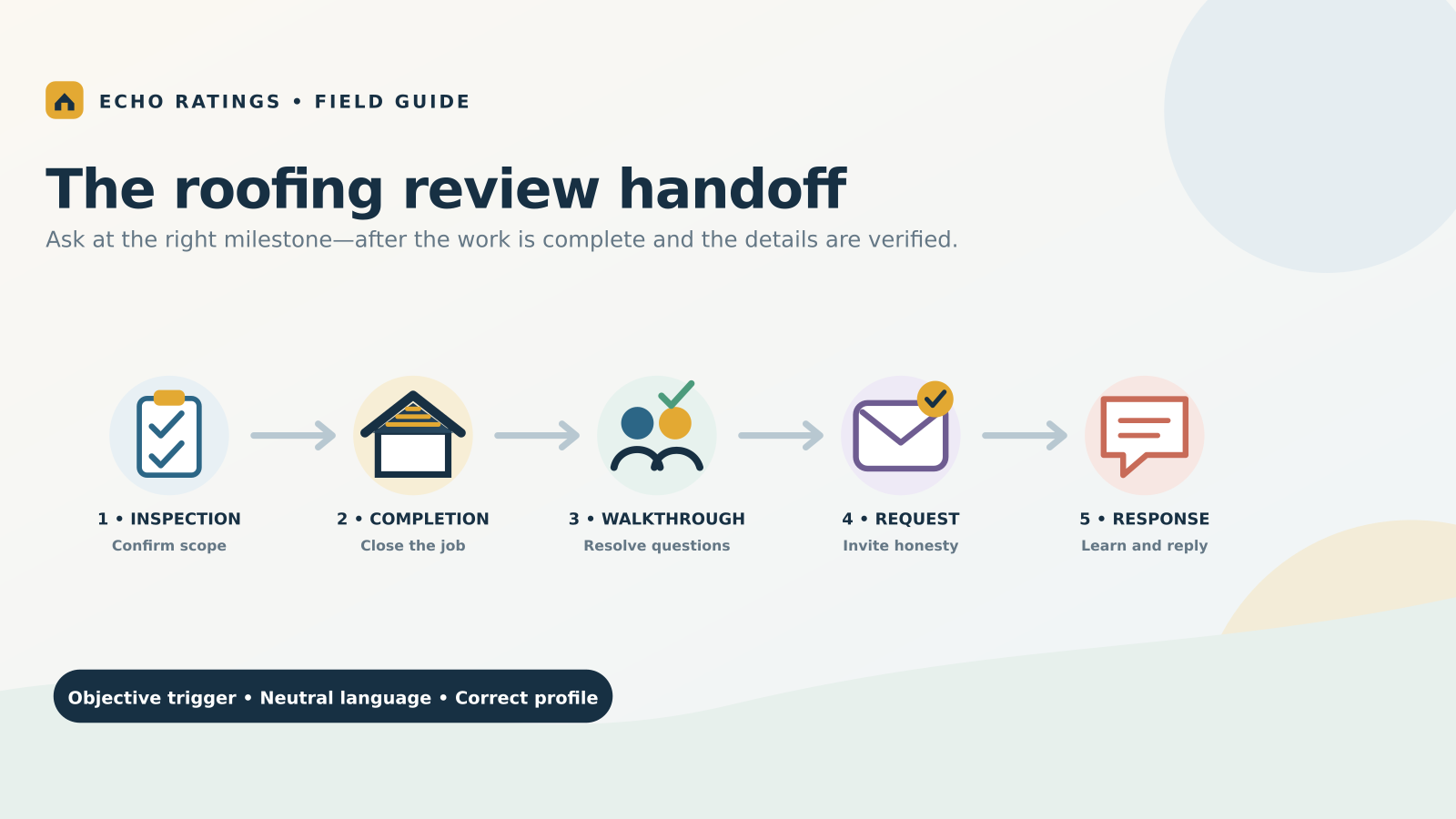
Send after the scheduled scope is finished and any agreed walk-through or photo handoff is complete. Do not require the customer to praise the work before they can see the public review link. A property manager who booked several units may need a separate contact policy so one week of jobs does not produce a burst of duplicate requests.
Recurring cleaning
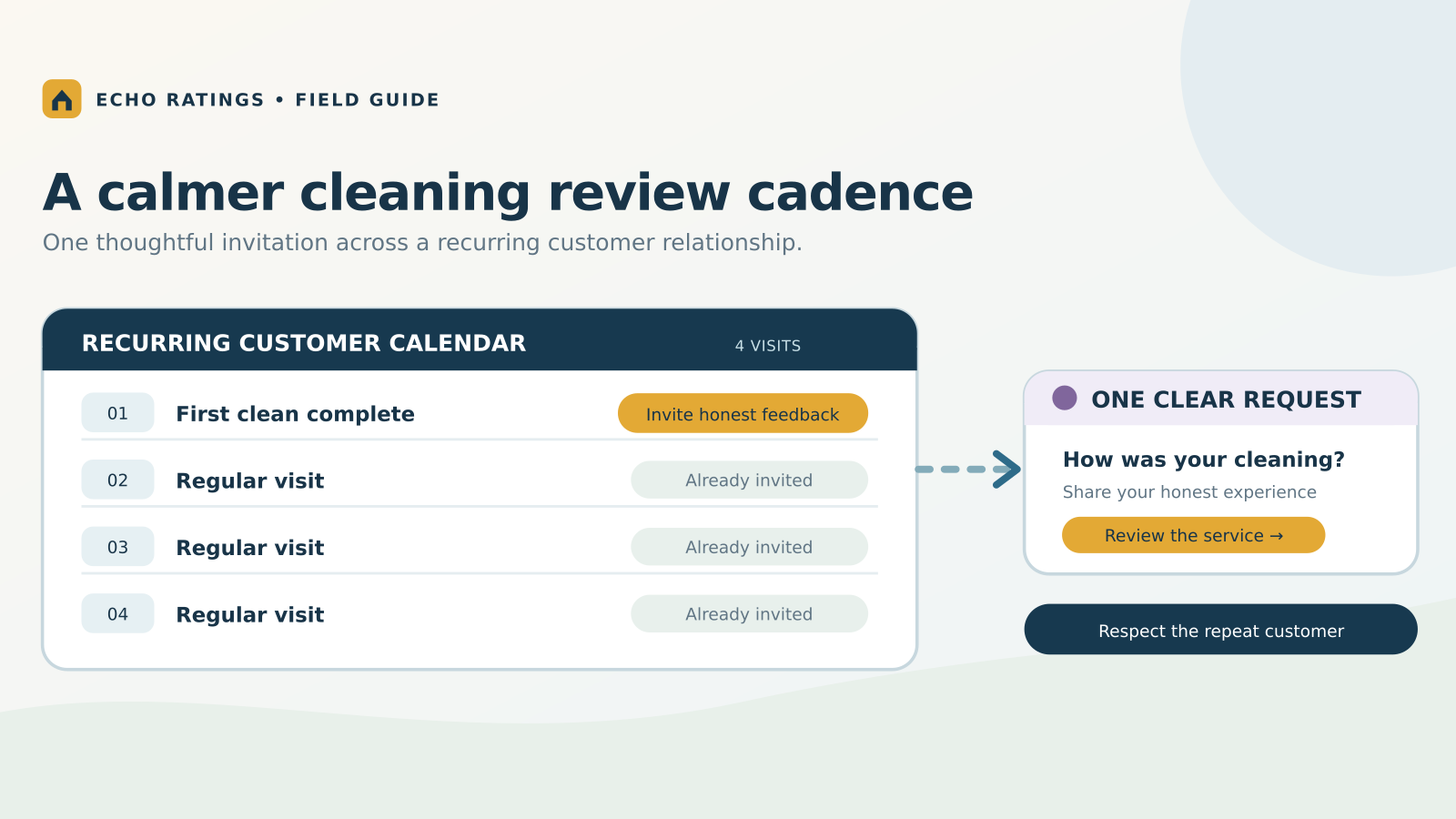
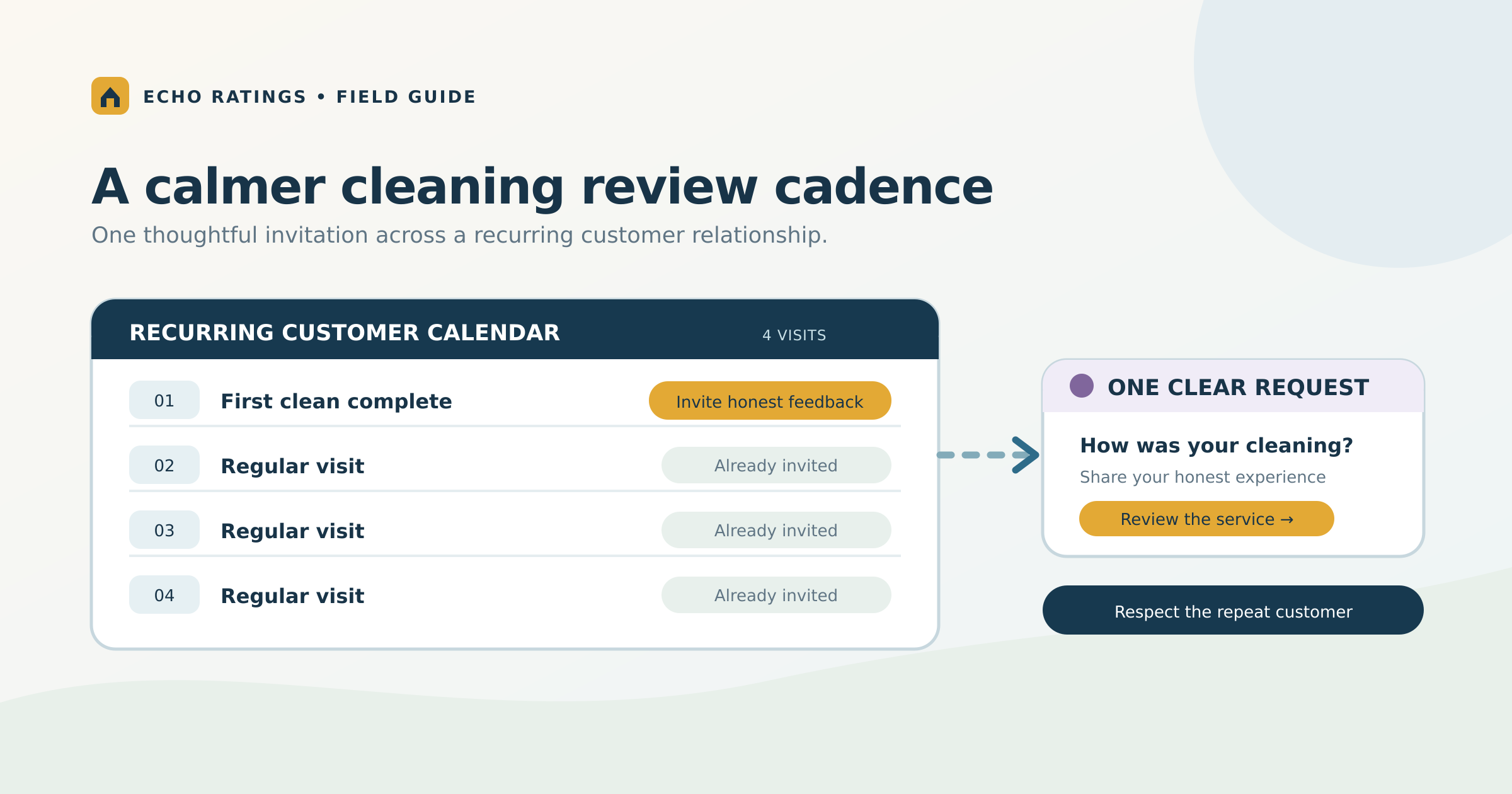
Choose a natural milestone such as completion of the first visit or the first several visits, depending on when customers can reasonably assess the service. Record that the customer has already been invited. A later request may make sense after a materially different service or a long interval, but set a conservative cap and have a manager approve exceptions. Do not send after every weekly or biweekly appointment.
Deep clean or specialty add-on
When a regular client buys a distinct service, decide whether that experience warrants a new invitation under the written rule. The purpose is to capture genuine feedback about the work, not to multiply requests to your best customers.
The trigger can be expressed plainly: "Completed eligible service, contact permission recorded, no recent request for this household, verified location, and no unresolved operational exception." That sentence gives office staff and software the same decision standard.
Design the booking-to-review handoff
The minimum useful record includes a customer ID, household or service address ID, completed visit ID, service type, completion time, responsible team, contact preference, opt-out status, last request date, and review destination. Keep a reason code when a request is held or suppressed. That makes it possible to explain why one customer received a message and another did not.
Deduplicate by customer or household, not only by appointment. A new booking number is not a new person. If two adults in one home are both contacts, decide whether both should receive an invitation and avoid sending two identical messages minutes apart.
Use objective eligibility rules
Exclude cancellations, tests, appointments with no service, invalid contacts, opt-outs, duplicates, and jobs that are still genuinely incomplete. Do not remove a customer from the public-review audience simply because a cleaner or office manager expects criticism. Google's Maps content policy prohibits discouraging negative reviews and selectively soliciting positive ones.
A private satisfaction survey may help the team identify missed areas or scheduling problems, but its score should not determine whether the customer gets the public review invitation. The Echo Ratings review-gating guide explains that boundary with examples.
Set a respectful send and stop rule
Send at a reasonable local hour after the service is complete and the customer has a chance to see the result. For an occupied home, that might be later the same day or the next day. For move-out work, wait for the agreed closeout. Use one clear invitation and, if appropriate, one polite reminder. Stop after a review, opt-out, failed delivery, or the reminder limit. If a customer raises an urgent issue, give it a service owner rather than allowing a queued reminder to continue blindly.
The post-service automation guide covers triggers, delays, duplicate suppression, and stop conditions.
Write a request that sounds like a real cleaning business
Google's official review-link instructions show how to copy the direct link from a Business Profile. Test it on a phone and confirm it opens the correct company or branch. Use one visible link with descriptive words rather than hiding the action in vague text.
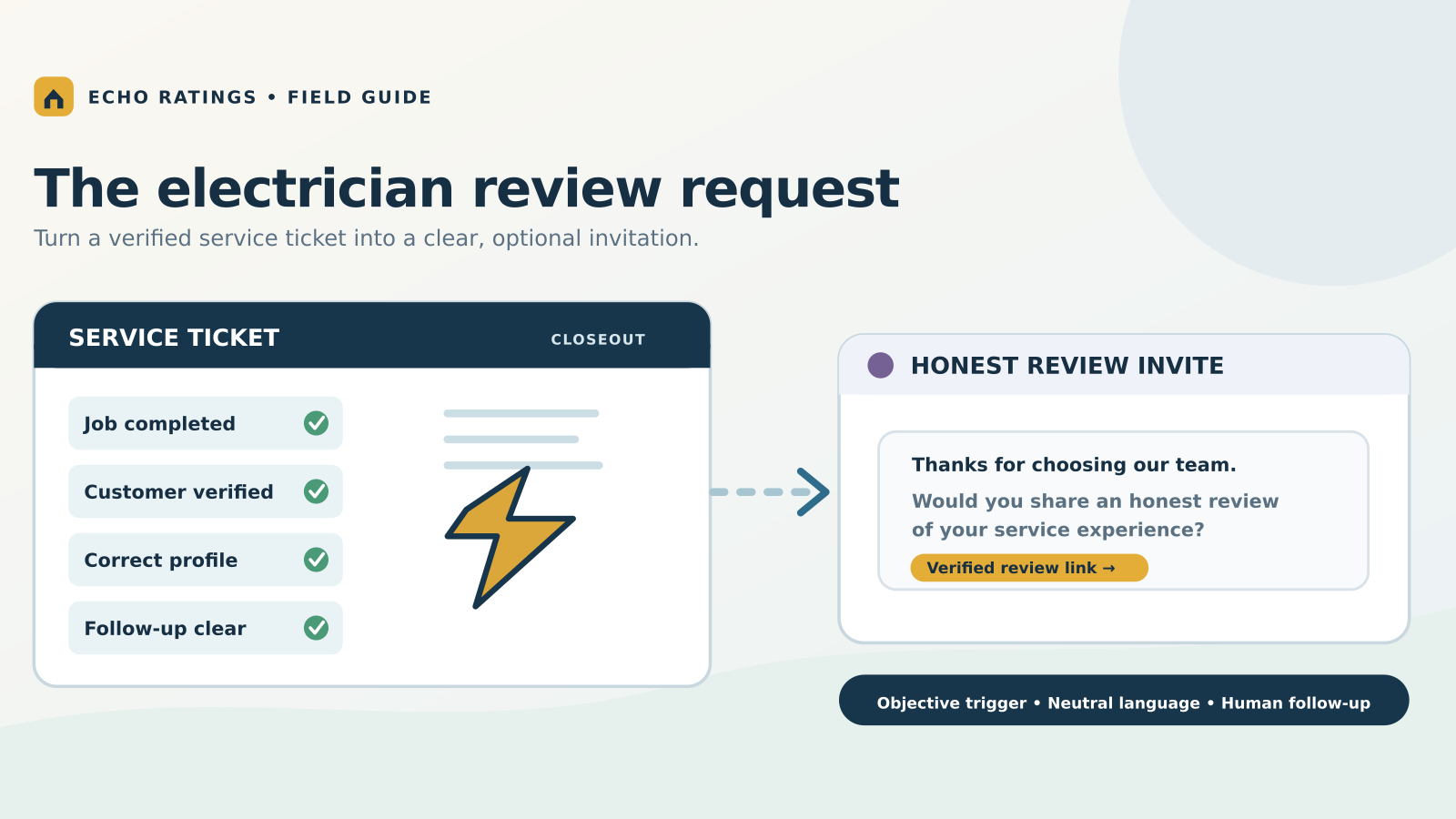
First-time visit example: "Hi Maya, thank you for inviting Bright Room Cleaning into your home today. If you have a moment, would you share an honest review of your cleaning experience? [verified review link]."
Move-out clean example: "Your move-out cleaning is complete. We appreciate the chance to help with your move. If you would like to share how the service went, here is our review link: [verified review link]."
Replace the sample company name and placeholder with your verified details before sending. Keep the wording neutral. The home-service request templates provide more examples, and the link and QR-code guide helps you test the customer path.
Give service recovery its own lane
Cleaning complaints often concern something specific: a missed room, damaged item, late arrival, unclear scope, pet instruction, key handling, or privacy concern. Assign the issue promptly, check the booking notes, and give the customer a clear next step. Keep the resolution process independent from their public feedback.
Google's policy allows businesses to encourage reviews based on genuine experiences without influencing the rating or content. It bars fake engagement, review incentives, and selective positive solicitation. The FTC's Consumer Reviews and Testimonials Rule Q&A discusses fake reviews, sentiment-conditioned incentives, insider reviews, and review suppression. Keep review invitations free of promised benefits or compensation, and get qualified advice for a specific campaign if needed.
Document any temporary pause for a serious safety, privacy, legal, or property-damage matter. It should have a reason, owner, and review date. An open service ticket should not become a blanket way to exclude unhappy customers from the public option.
Reply without exposing the customer's home
Google says Business Profile replies are public and should be professional, relevant, and mindful of privacy. Its review-management guidance recommends acknowledging the issue and moving complex details to a private conversation.
Positive review
Thank the customer and mention one detail they chose to share, such as punctual arrival or communication. Avoid copied replies and do not name the cleaner or describe the home unless that information is already public and appropriate to repeat.
Critical review
Acknowledge the concern and provide a private contact route. Do not reveal the service address, access code, schedule, household members, pet details, payment dispute, photos of rooms, or the cleaner's private information in a public reply. Verify what happened before promising a specific remedy.
Disputed or suspicious review
Check your records and respond calmly if there is a genuine customer experience. If content appears to violate Google policy, use the official reporting process; a low rating by itself is not grounds for removal. The negative-review response guide
Make the right location easy to find
Many cleaning teams travel to customers rather than receive them at an office. Google's Business Profile guidelines explain service-area profiles, accurate addresses, and when distinct staffed locations may qualify for separate profiles. Route each request to the verified profile that legitimately served that home. A rented mailbox or cleaner's residence is not a reason to create an extra profile.
If several branches share a booking system, map the completed visit to a stable branch ID before choosing a link. For larger operators, the multi-location guide
Measure customer coverage and request fatigue
Review count alone can hide a broken workflow. A cleaning company may have hundreds of recurring appointments but a much smaller number of distinct customers who should receive a request. Report both visits and eligible customers so you do not mistake appointment volume for review opportunity.
- Unique customers with an eligible completed service
- Customers invited, held, suppressed, and opted out
- Requests per customer or household over time
- Messages delivered, failed, and clicked where reliable
- New reviews and the age of recent feedback
- Response coverage and time to respond
- Service issues by theme, team, and location
- Wrong-profile links and duplicate sends
Read the comments for patterns you can act on: arrival windows, communication, supplies, missed areas, key handling, and follow-up. Do not promise that a specific rating or review count will cause a particular ranking or revenue result. Use the business's own baseline and investigate the process behind changes.
A practical 30-day rollout
Week 1: Map services and customers
List one-time, first-time, and recurring service types. Identify the field that marks each job complete, the household ID, the last-request field, opt-out status, and the serving location. Write a simple frequency cap.
Week 2: Test the customer path
Generate and verify each review link. Preview the message on a phone. Test a first clean, repeat visit, move-out clean, cancellation, complaint, opt-out, duplicate household, and wrong-location record. The intended message should appear only for records that meet the written rule.
Week 3: Pilot one team
Start with a manageable group. Compare completed visits with eligible unique customers and actual sends. Read each exception and ask staff whether the completion status accurately reflects the work.
Week 4: Refine and expand
Check duplicate frequency, opt-outs, delivery problems, link routing, review responses, and open service issues. Adjust the cadence or handoff based on evidence, then document the final rule for the rest of the company.
Teams comparing systems can use the reputation software evaluation guide to assess integrations, permissions, reporting, and safeguards.
Frequently asked questions
Should we ask after every cleaning?
No. Set a restrained rule based on distinct customer experiences and keep track of recent requests to that household. The customer can have many appointments without needing many invitations.
Can we ask after the first clean?
Yes, if the service was completed and the customer can reasonably assess it. If the team still owes a return visit as part of that job, wait until the work is complete.
Can we ask only clients who told us they are happy?
That would selectively solicit positive feedback. Use the same neutral eligibility rule regardless of expected sentiment. A private feedback route can exist alongside the public review link for everyone.
What if a customer posts a negative review about a cleaner?
Check the service record and handle the concern privately with the customer and the employee. A public reply should acknowledge the issue without disclosing details about the home, schedule, or personnel matter.
Should we use a QR code on a leave-behind card?
It can be an optional route if it opens the correct profile. Google permits sharing QR codes but says businesses should not pressure customers to write a review while staff are on the premises. Let customers choose when to respond.
Keep the invitation useful and the relationship intact
A good cleaning review system respects the difference between appointments and customers. It invites honest feedback after a real service, limits repeat messages, routes concerns to a person, and helps the business learn from what clients say.
Explore Echo Ratings to organize review requests, monitoring, and responses. You can compare pricing, start with a free reputation audit, try Echo Ratings, or book a walkthrough.
This article offers general operational information, not legal advice. Review messaging consent, privacy, advertising, and platform requirements with qualified advisors for your business.