
Reputation

Automating Reputation Without Losing Authenticity

12/16/2025
15min read
All

Why Automation Feels Risky to Small Business Owners

For many small business owners, the idea of automating reputation management triggers immediate resistance. Reviews are personal. Responses feel like conversations. Handing that responsibility to software can feel like sacrificing the very thing that makes a business human.

That hesitation is reasonable.

Customers can spot inauthentic communication quickly. They know when a reply is generic, rushed, or copied from a template. They sense when automation replaces care instead of supporting it. That is why poorly executed automation often backfires, making a business feel distant rather than attentive.

The question is not whether automation belongs in reputation management.

The real question is whether it is implemented with respect for the customer relationship.

EchoRatings was built around this distinction.

The Reality: Manual Reputation Management Does Not Scale

Most SMB owners genuinely want to respond thoughtfully to every review. The problem is not intent. It is capacity.

As review volume grows across Google, Yelp, Facebook, and industry platforms, keeping up manually becomes unrealistic. Responses get delayed. Some reviews go unanswered. Tone becomes inconsistent depending on who replies or how busy the week has been.

Over time, inconsistency erodes trust just as much as silence. Customers do not expect perfection, but they do expect presence.

Automation exists to solve this operational problem. The risk only appears when automation replaces judgment rather than supporting it.

Where Reputation Automation Commonly Goes Wrong

Automation fails when it prioritizes efficiency over empathy. Businesses run into trouble when every reply sounds the same, when responses are posted instantly without context, or when negative reviews receive the same tone as positive ones.

Customers notice when replies ignore the specifics of their experience. They notice when language feels overly formal or disconnected from the business’s real personality. In those moments, automation stops being invisible and starts feeling like a shortcut.

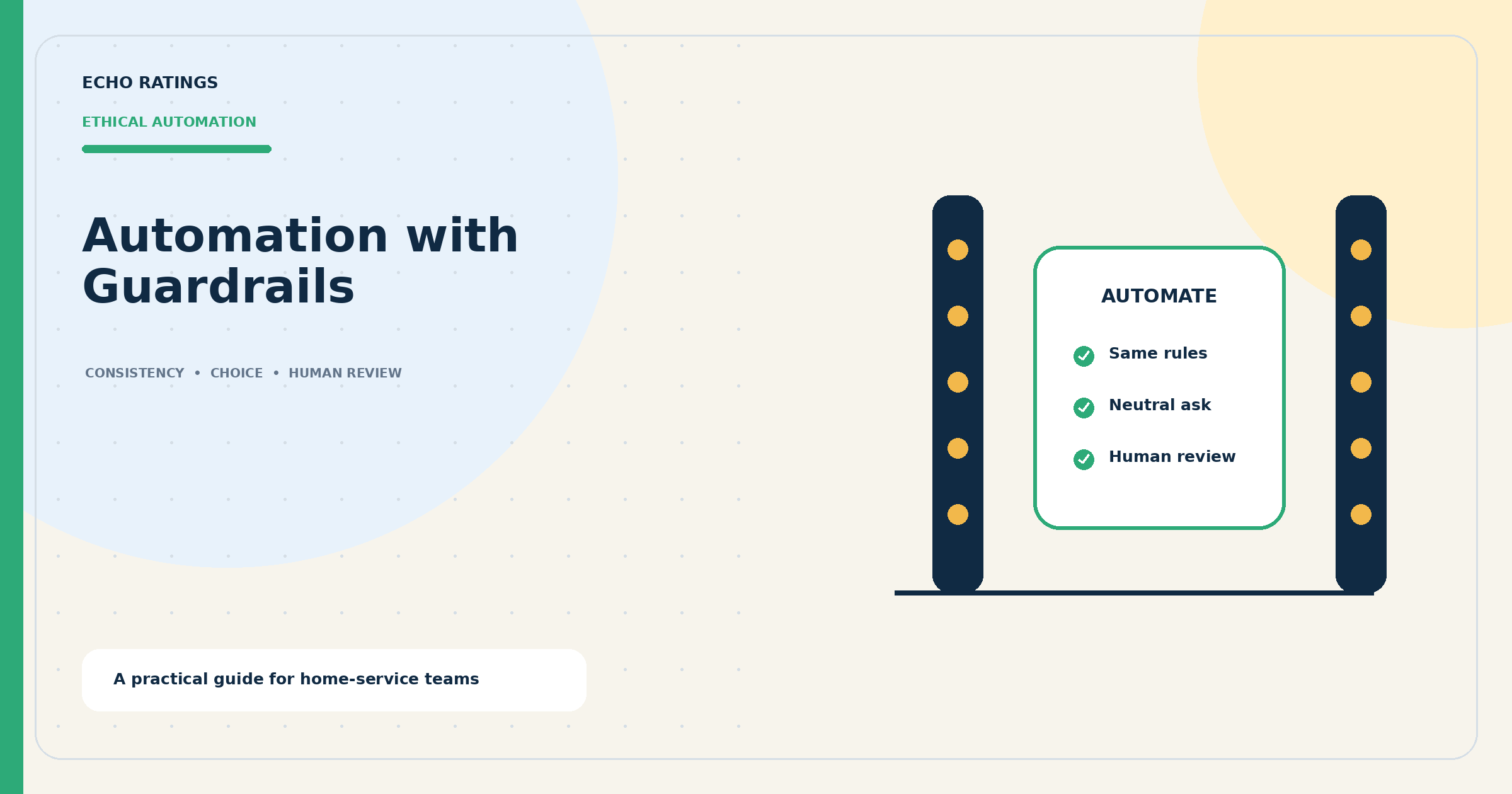
This is why reputation automation must be designed around guardrails, not speed alone.

Authenticity Is Not About Writing Everything Yourself

A common misconception is that authenticity requires manual effort. In reality, authenticity comes from relevance, tone, and timing.

A response feels authentic when it addresses what the customer actually said, acknowledges their experience, and sounds like it came from a real person who cares. Whether the first draft was written by a human or a system is less important than whether the final message reflects the business accurately.

EchoRatings uses automation to generate thoughtful draft replies, not to publish blindly. The business owner stays in control of the final voice, ensuring that every response aligns with their values and communication style.

How EchoRatings Automates Reputation Responsibly

EchoRatings approaches automation as a support system, not a replacement for human interaction. Each review is analyzed individually so that the draft response reflects the tone and content of the customer’s feedback. Positive reviews receive appreciation that feels specific. Constructive feedback receives acknowledgment that feels empathetic.

The platform is designed to slow things down where it matters. Drafts can be reviewed, edited, and approved before publishing. This prevents the robotic patterns that customers distrust and preserves the sense of intentional communication.

Automation handles consistency. Humans preserve meaning.

What Responsible Automation Looks Like in Practice

In practice, responsible automation feels quiet. Reviews receive timely responses. Tone stays consistent. Customers feel acknowledged. Nothing draws attention to the process behind the scenes.

For example, a customer leaves a detailed positive review mentioning a specific staff member or outcome. The draft reply reflects that detail, thanks the customer by name, and reinforces the value they experienced. The owner reviews it quickly, makes a small adjustment if needed, and approves it.

For a critical review, the draft reply acknowledges the issue and invites offline resolution without defensiveness. The owner ensures the message aligns with their service standards before publishing.

The process is efficient, but the result feels personal.

Why Customers Respond Positively to Thoughtful Automation

When automation is done well, customers do not perceive it as automation at all. They experience responsiveness, care, and professionalism.

Consistent replies show that feedback matters. Timely responses signal accountability. Thoughtful language reinforces trust. Over time, these interactions shape how future customers perceive the business before they ever reach out.

This is where automation becomes a competitive advantage rather than a liability.

Automation as a Reputation Safety Net

One of the overlooked benefits of automation is risk reduction. Without a system in place, reviews can pile up during busy periods, vacations, or staffing changes. Silence during those moments creates gaps that customers interpret negatively.

EchoRatings acts as a safety net, ensuring that no review goes unnoticed and no period of inactivity undermines your credibility. The system keeps reputation management moving even when the business is focused elsewhere.

The Long-Term Impact of Authentic Automation

Over time, businesses that automate responsibly see more consistent review activity, stronger engagement, and healthier online perception. Reputation becomes something they manage proactively rather than reactively.

This consistency compounds. More reviews lead to more trust. More trust leads to higher conversion rates. Higher conversions lead to growth that feels earned rather than forced.

Authenticity is not lost through automation. It is protected by it when implemented correctly.

Closing Thought: Automation Should Amplify Your Voice, Not Replace It

The goal of reputation automation is not to sound efficient. It is to sound present.

When customers feel heard, they trust. When prospects see that trust in action, they choose you. Automation should exist to make that possible at scale, not to shortcut the relationship.

EchoRatings was designed to automate reputation without losing authenticity, allowing small businesses to stay human while operating efficiently.

If you want to grow without losing what makes your business real, this is where automation belongs.

Related articles